


Public Park Flower Clock with 2.5 m Second Hand & Precision Time Control
Public Park Flower Clock with 2.5 m Second Hand & Precision Time Control
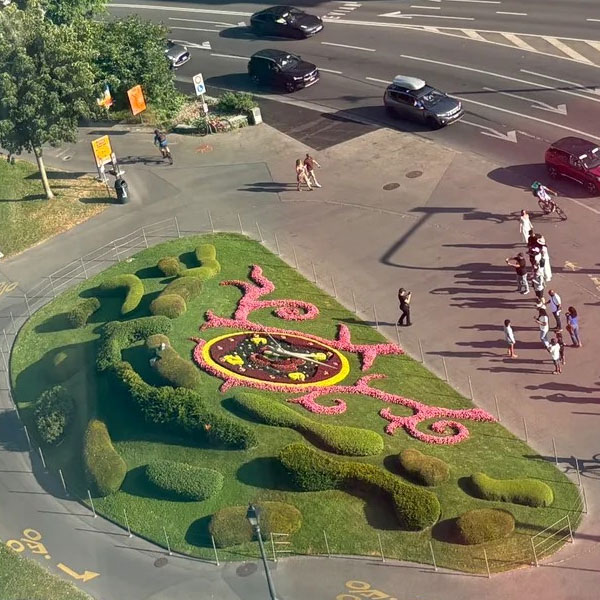
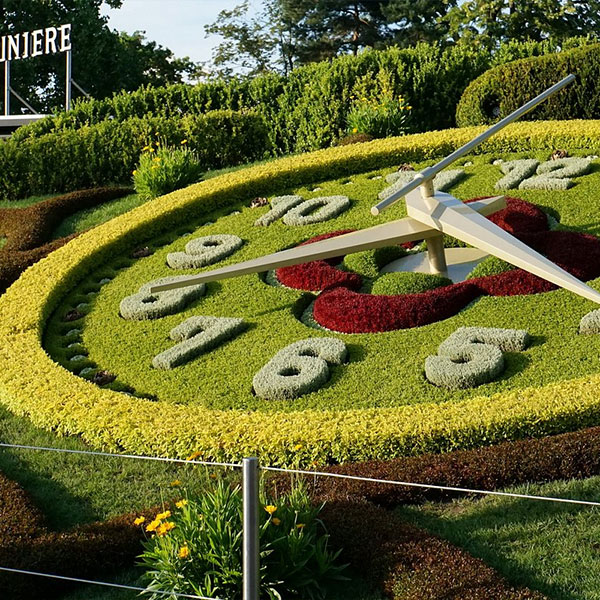
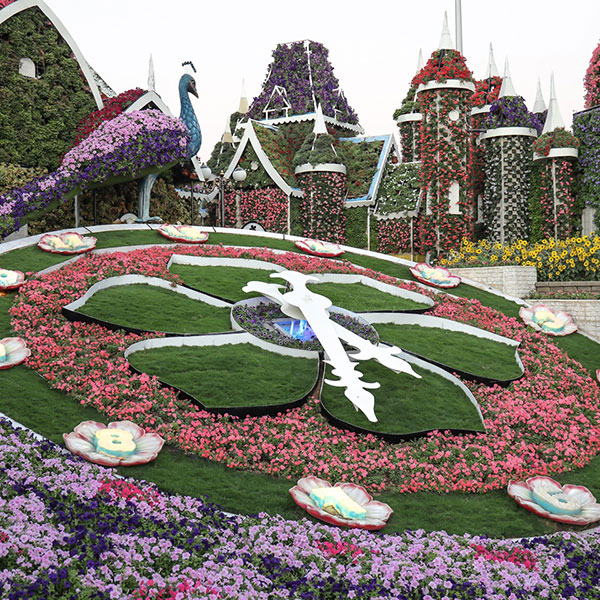
A monumental floral clock in a public park is a rare civic asset: it combines timekeeping infrastructure, landscape architecture, and city identity in one highly shareable landmark. This case features a famous Swiss lakeside flower clock built into a gently sloped garden bed near a central civic waterfront promenade—positioned where pedestrian flows, photo angles, and ceremonial routes naturally concentrate.
Originally created in 1955 by landscape architect Armand Auberson, the installation was conceived as a public tribute to local watchmaking culture—an outdoor timepiece that merges Swiss precision with living horticulture.
Civic-scale readability that works “at walking speed”
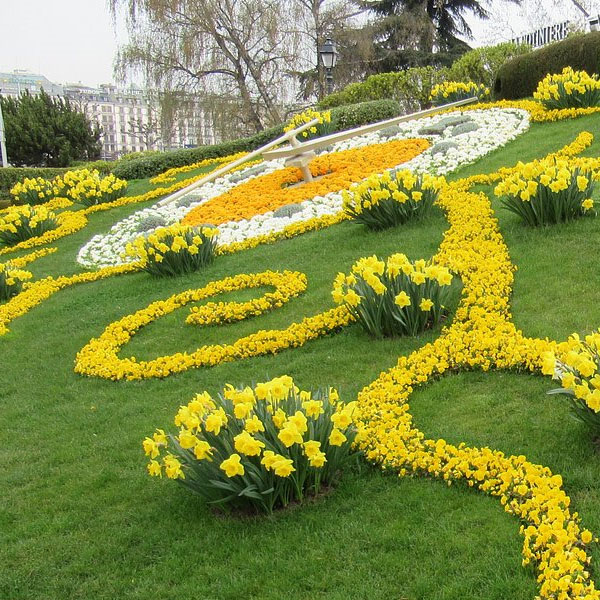
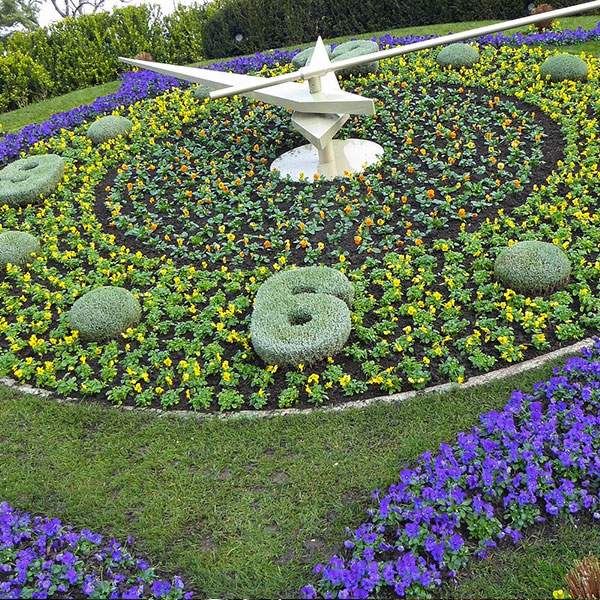
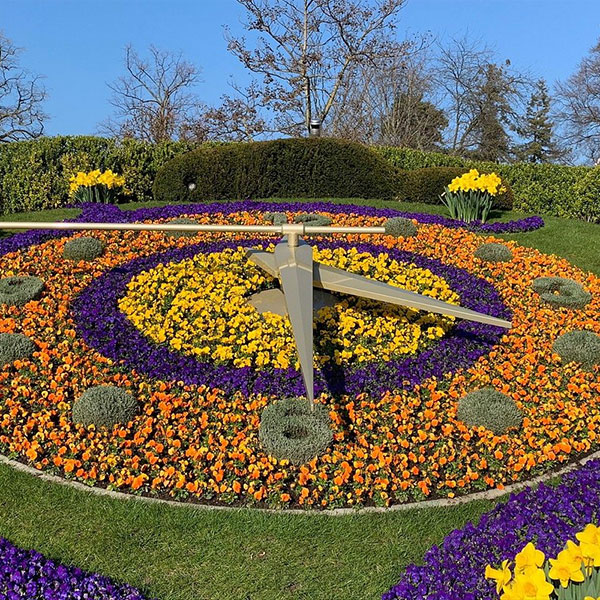
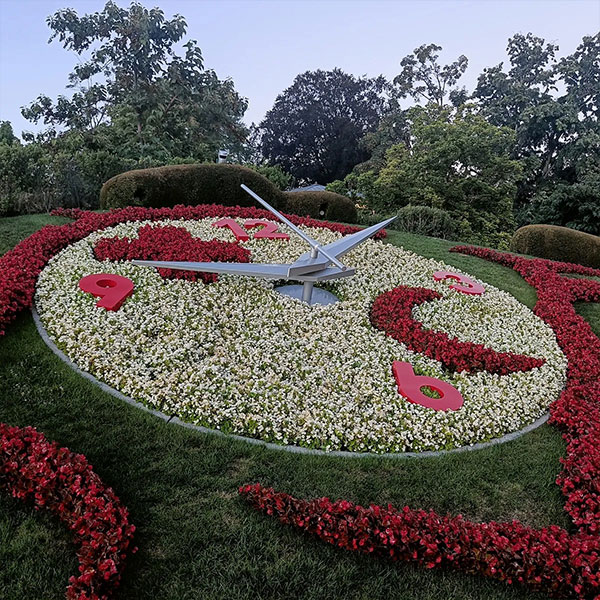
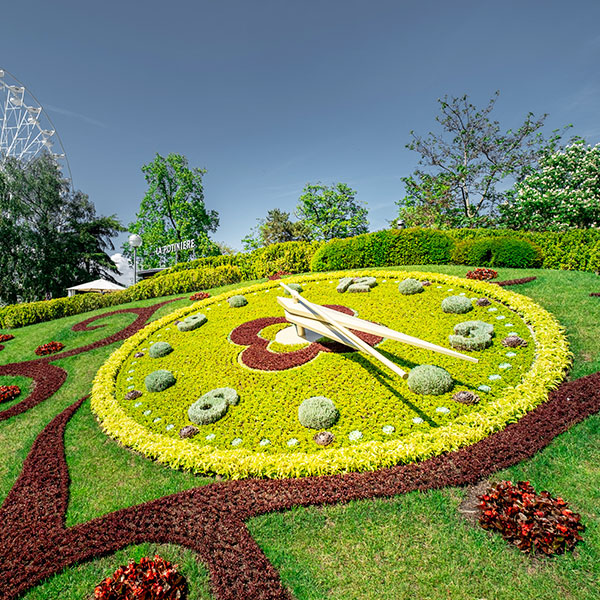
The dial is designed to read instantly from multiple viewpoints. Oversized hands and a clear center hub create strong geometry, while the planting design uses bold color fields, clean boundaries, and raised numeral elements (seasonally variable). This produces a “graphic-first” landmark—legible even when viewers are moving, crossing streets, or photographing from above.
Living display surface: seasonal redesign as a public-program tool
Unlike static monuments, a floral clock can be re-skinned. This clock is refreshed multiple times per year to match the seasons, with horticultural teams maintaining crisp edges and consistent legibility.
In practice, that programmability turns the clock into a planning-friendly civic feature: a renewable display that can align with cultural calendars, public events, or tourism campaigns—without structural reconstruction.
Horticulture + operations: what makes the landmark sustainable
For public owners and sponsors, the real success metric is not only “beauty,” but uptime + maintainability:
Planting volume & detail control: the face uses thousands of plants (reported figures vary by season and design scheme), arranged in dense mosaiculture patterns to keep lines sharp.
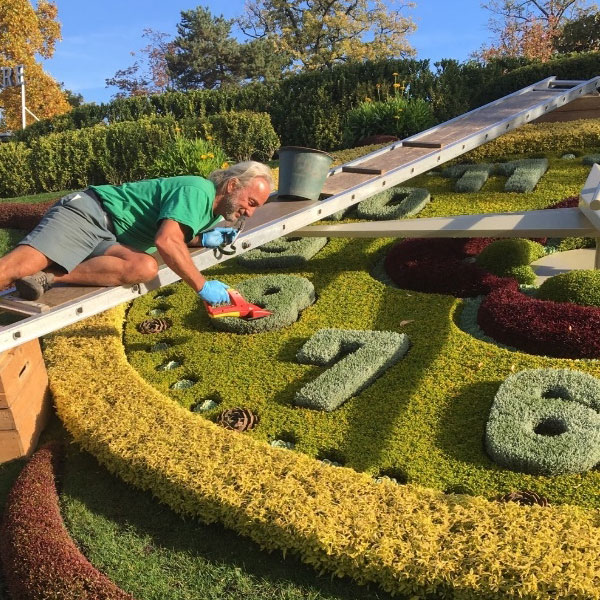
Maintenance discipline: the site is known for regular gardener checkups and a high standard of horticultural finish, supporting a consistently “clean” dial edge and readable numerals.
Low-chemical stewardship: public-facing garden clocks are increasingly expected to demonstrate environmentally responsible practices; this site is described as operating without pesticides or artificial products.
Precision timekeeping: an engineered clock, not a decorative garden
A flower clock becomes a true “public facility” when the mechanism is treated as infrastructure. This landmark is widely noted for its 2.5 m second hand, described as the longest in the world—an engineering choice that reinforces visibility and civic spectacle.
Public sources also describe time transmission/precision control consistent with Swiss expectations (including satellite-referenced accuracy in visitor information), and the clock has received design updates to its hands and floral concept in recent years.
How this fits public projects, procurement, and design governance
For a Mayor’s Office, City Planning Department, parks authority, or a public-university/civic campus client, a floral clock can be framed as Public Infrastructure + Placemaking:
Capital project fit: integrates cleanly into park masterplans, waterfront promenades, civic squares, and public-building forecourts as a signature node.
Design team alignment: landscape architects can specify the planting geometry and sightline logic; clock specialists deliver the drive system, hands, hub, and weather-ready detailing.
Tender-ready scope: can be packaged for procurement as (1) civil/landscape works, (2) clock system supply & installation, (3) irrigation, and (4) multi-year O&M (operations and maintenance) with seasonal replanting.
Measurable outcomes: increases dwell time, improves wayfinding (“meet at the clock”), supports tourism imaging, and offers year-round content opportunities for city communications.
Why sponsors and public owners fund this type of landmark
A Swiss-style floral clock provides an unusual blend of engineering credibility and renewable public beauty:
City branding: an instantly recognizable image for campaigns and visitor itineraries
Civic pride: a daily-use landmark that also performs during events and peak visitation
Seasonal storytelling: a living “billboard” for spring/summer/autumn themes
Longevity: durable infrastructure with a renewable horticultural face—keeping the landmark fresh over decades
Leave Your Message
Products categories
-
40-Foot Floral Clock Landmark for Public
-
Giant Floral Clock Pavilion with Sloped
-
Tropical Floral Clock Landmark for Publi
-
Giant Floral Clock for Civic Squares &am
-
Heritage Flower Clock Landmark for Urban
-
GPS-Synchronized Flower Clock Landmark f
-
Public Park Flower Clock with 2.5 m Seco
-
Flower Clock, Garden Floral clocks fc003
-
Flower Clock, Garden Floral clocks
-
Floral Clock, Garden Floral clocks