


Tropical Floral Clock Landmark for Public Gardens and Conservatories
Tropical Floral Clock Landmark for Public Gardens and Conservatories
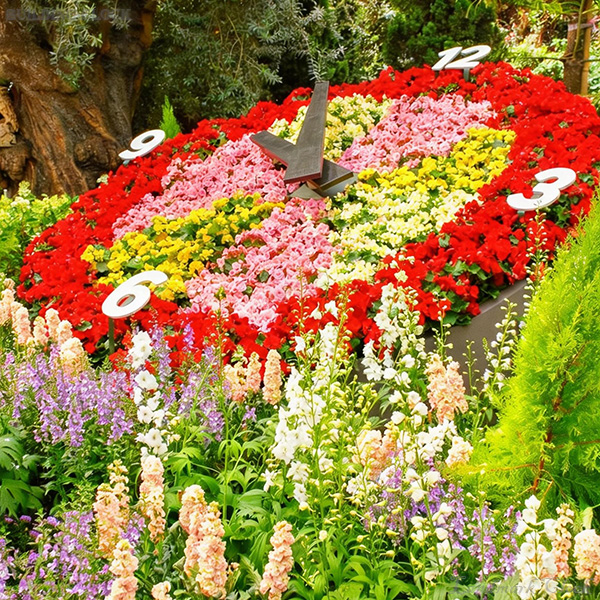
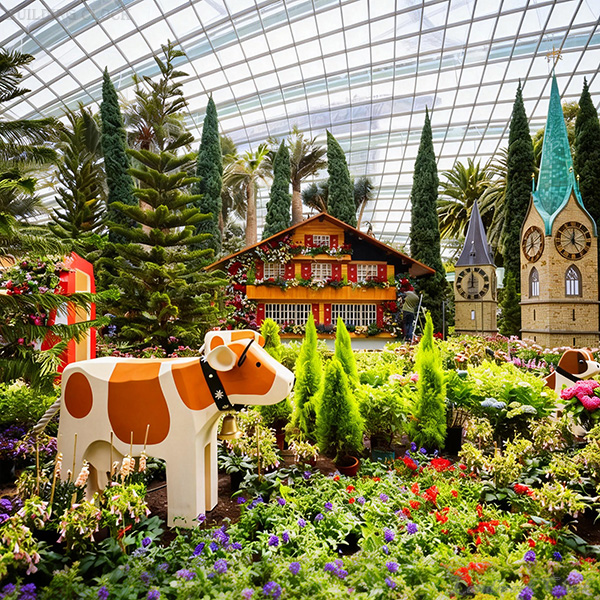
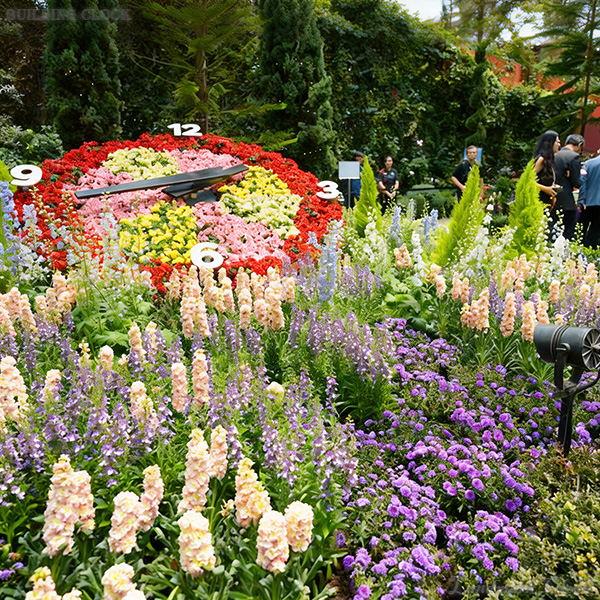
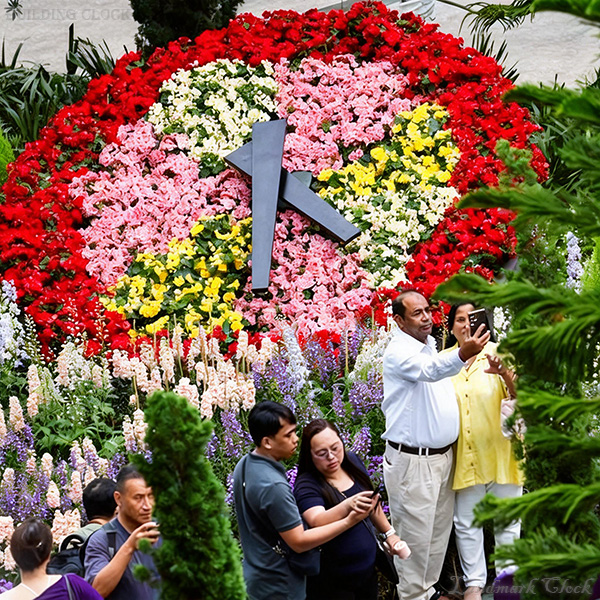
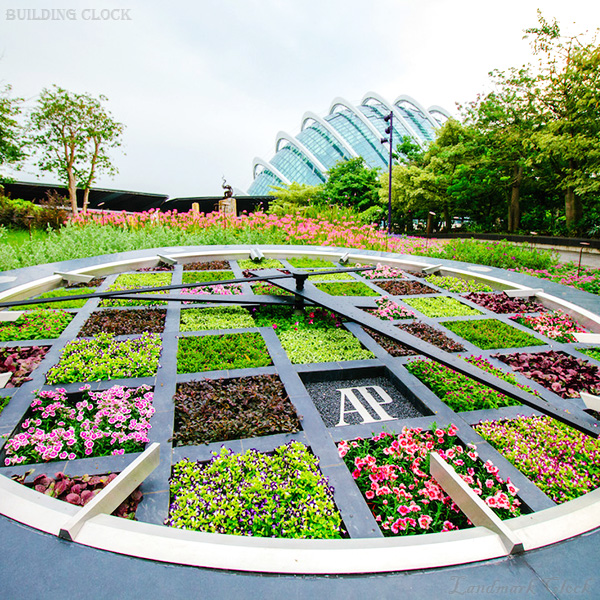
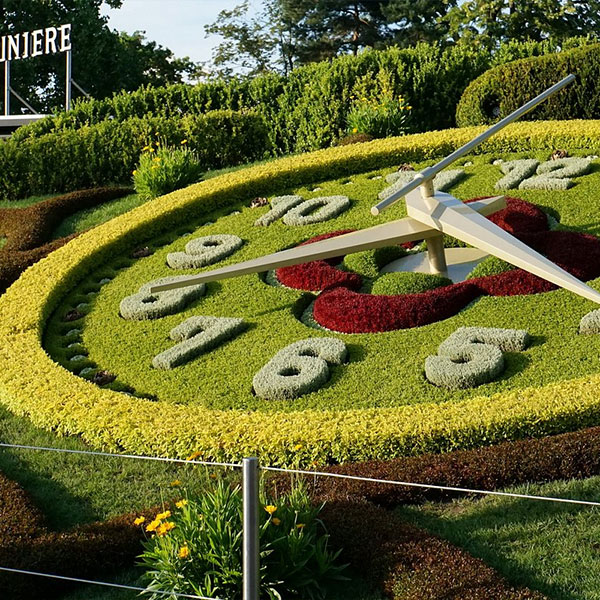
A floral clock can be more than a decorative time feature. When engineered as a public realm asset, it becomes a reliable landmark, a seasonal branding canvas, and a high value photo destination that supports visitor flow, wayfinding, and event programming. This case demonstrates a large scale floral clock within a flagship waterfront garden setting in a tropical city environment, where horticulture, placemaking, and precision timekeeping are integrated into one cohesive public experience.
A landmark that performs like infrastructure
Public clients often want iconic objects that still behave like dependable infrastructure. This floral clock achieves that balance by combining a robust outdoor clock drive with a planting system designed for frequent refresh cycles. The result is a feature that reads clearly at a distance, photographs well from multiple approach lines, and can be maintained through predictable routines rather than heroic effort. In high visitation parks and conservatory districts, that predictability is what makes an installation sustainable over many years.
Readability that supports crowd movement
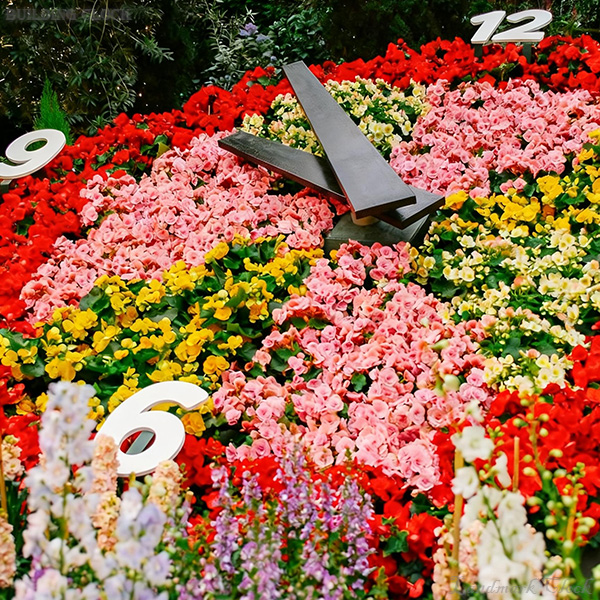
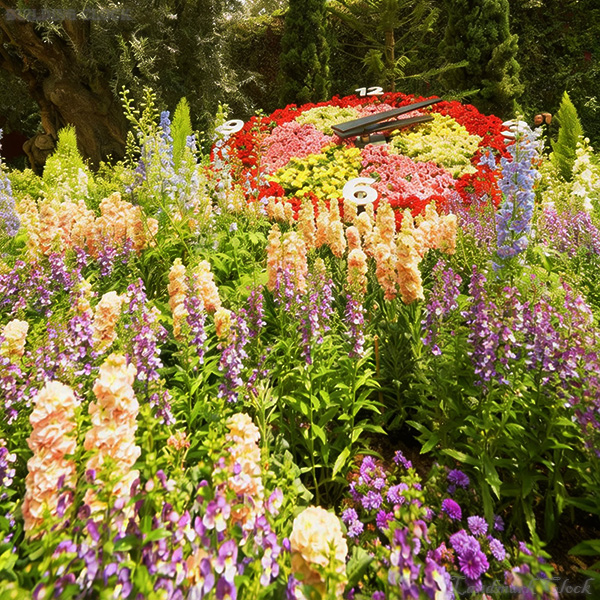
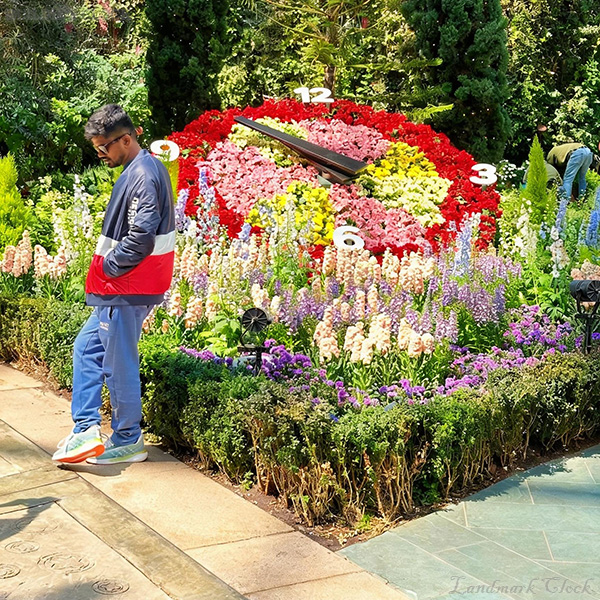
The dial geometry is intentionally simple and legible. Bold hour markers and oversized hands allow instant reading for walking visitors. In real operations, quick readability matters because it reduces dwell time in narrow paths, supports intuitive meeting points, and improves overall circulation. The surrounding planting bands also act as a soft buffer that discourages shortcutting across the feature while preserving an open, welcoming edge for photos.
Design language that blends heritage and contemporary placemaking
This clock uses a premium watch inspired design language in a landscape medium, bringing a recognizable timepiece character into a public garden. For owners, this type of design storytelling is valuable: it makes the clock feel authored rather than generic, which strengthens destination identity and increases media pickup. It also creates natural narratives for interpretation panels, guided tours, sponsorship conversations, and anniversary programming.
Planting strategy built for regular changeovers
A floral clock works best when the planting strategy is treated as an operations plan, not only as a planting plan. In this case, the plant palette emphasizes strong color blocking and contrasting foliage, allowing the dial to be refreshed regularly without changing the underlying structure. That approach supports seasonal festivals, holiday themes, and campaign moments while keeping the asset technically stable. For a tropical climate and year round tourism, this is especially important: the landscape team needs a repeatable method for color renewal, pest and disease control, and predictable replacement cycles.
Precision timekeeping with modern synchronization
For destination parks and government backed public landscapes, reliability is a reputational issue. Visitors notice when a clock is wrong, and staff time is wasted when calibration becomes frequent. This case demonstrates a modern approach where the clock hands are guided by GPS timekeeping technology, improving accuracy and reducing manual correction. For owners, this also simplifies responsibility lines across departments, because time accuracy becomes a system feature rather than a daily task.
What planners, designers, and funding stakeholders care about
A floral clock is usually evaluated across multiple stakeholder lenses:
Public value and identity
A floral clock becomes a recognizable landmark that reinforces place branding, supports tourism photos, and strengthens the identity of a civic garden district.
Lifecycle and maintainability
A successful clock is engineered for access, modular replacement, and clear separation between mechanical service zones and horticultural work zones.
Procurement and delivery clarity
Public clients need a scope that can be tendered cleanly, often with separable packages for civil works, mechanical timekeeping, planting and irrigation, and signage.
Risk management
Heat, storms, high humidity, and heavy footfall require durable materials, safe foundations, and planting systems that can be renewed without disrupting operations.
Programming potential for parks, conservatories, and festivals
Large gardens increasingly operate like year round cultural venues. A floral clock supports that direction because it is both a daily amenity and a programmable canvas. Operators can plan themed planting palettes to match seasonal displays, sponsor activations, national celebrations, and evening events. Because the clock is inherently time themed, it also fits naturally with educational storytelling about horticulture cycles, engineering, and sustainability operations.
A practical benchmark for future projects
For landscape architects, design institutes, and public sector owners, this case offers a practical benchmark: keep the geometry bold, treat the planting as a renewable layer, and specify the movement as durable public infrastructure. When those principles are followed, the floral clock becomes a long term signature asset that remains fresh without requiring redesign.
Fixed Professional Content and Specification Table
Professional Notes Engineering and Landscape Integration
System Type: Outdoor floral clock with living planting display and mechanical timekeeping system
Typical Applications: Public parks, botanical gardens, conservatory districts, civic plazas, visitor attractions, waterfront promenades, resort landscapes
Design Principle: Permanent dial geometry with renewable seasonal planting for efficient long term operations
Readability: Oversized hands and bold hour markers designed for pedestrian and plaza viewing distances
Landscape Compatibility: Dial face supports seasonal annuals and perennials, foliage mosaics, and themed festival palettes
Operations Planning: Clear maintenance zoning between dial planting, perimeter planting, irrigation control, and mechanical access improves staffing efficiency
Procurement Fit: Suitable for Design Bid Build and Design Build delivery, with separable scopes for civil and foundation works, clock system supply, irrigation and planting works, and interpretive signage
Timekeeping Reliability: GPS guided time synchronization reduces manual setting and improves visitor trust in accuracy
Specification Parameters Typical and Customizable
Item | Standard Configuration | Options and Notes |
Dial Diameter | Custom built | Typical range 3 m to 12 m depending on site visibility and budget |
Display Type | Large markers with seasonal planting | Arabic numerals, Roman numerals, minimal markers, branded motifs, city or sponsor identity patterns |
Hands | Oversized hour and minute hands | Aluminium, stainless steel, FRP composite, treated timber for heritage style, high visibility profiles |
Finish | Outdoor coating system | Powder coat, marine grade coating for coastal exposure, anti corrosion specification for humid climates |
Timekeeping Movement | Heavy duty outdoor clock drive | High torque movement for large hands, anti backlash design, sealed bearing assemblies |
Time Sync | GPS guided synchronization | Radio time sync or network time sync available where required |
Power Supply | AC mains | Solar hybrid possible subject to site conditions and shading study |
Control Access | Lockable service access | Tamper resistant enclosure, maintenance friendly layout, service documentation pack |
Foundation and Mount | Engineered central plinth | Designed to local codes, wind loads, drainage strategy, and soil conditions |
Dial Bed Construction | Edge restraint plus drainage layer | Enhanced drainage for heavy rainfall and controlled irrigation performance |
Irrigation | Zonal irrigation recommended | Smart controllers, moisture sensors, drought response programming, isolated maintenance shutoff valves |
Planting Strategy | Seasonal color change bed | Tropical foliage mosaics, festival themes, low allergen options, pollinator friendly selections |
Lighting Optional | Not included by default | Dial wash lighting, hand highlight, event lighting integration, low glare public realm standards |
Signage Optional | Not included by default | Interpretive plaque, donor or sponsor panel, QR based digital interpretation |
Maintenance Plan | Seasonal planting plus routine service | Spare parts kit, annual calibration, on site training, preventive maintenance schedule |
Climate Suitability | Outdoor public landscape | Material selection tuned to heat, UV, humidity, salt spray where applicable |
Delivery Scope Typical
Clock movement, hands, and mounting hardware
Dial layout drawings including geometry, marker positions, and hand clearances
Foundation interface requirements and installation guidance
Planting concept support for dial infill and perimeter framing
Commissioning procedure and time calibration documentation
Optional spare parts kit, training, and maintenance SOP documentation
Leave Your Message
Products categories
-
Seasonal Floral Clock Landmark for Metro
-
Heritage Floral Clock Landmark for Publi
-
Giant Floral Clock Pavilion with Sloped
-
Hilltop Park Floral Clock in South Korea
-
Tropical Floral Clock Landmark for Publi
-
Floral Clock Installation for Public Gar
-
Seaside Theme Park Floral Clock Landmark
-
Mountain Park Floral Clock Landmark for
-
GPS-Synchronized Flower Clock Landmark f
-
Public Park Flower Clock with 2.5 m Seco