


Seasonal Floral Clock Landmark for Metropolitan Parks | Carpet Bedding Timepiece
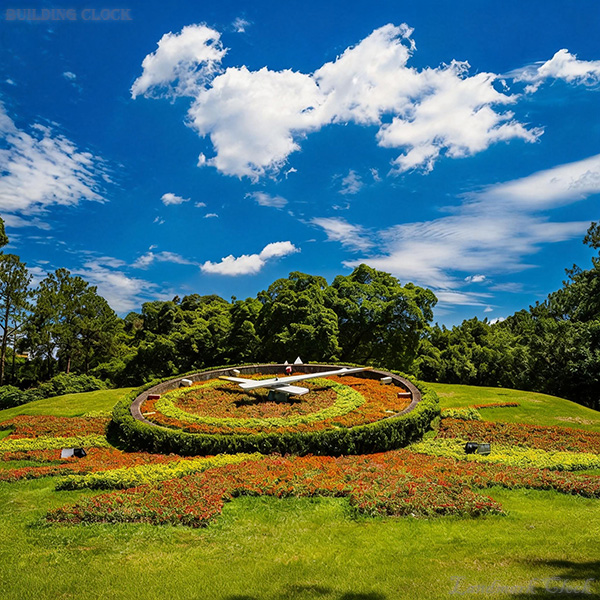
Seasonal Floral Clock Landmark for Metropolitan Parks | Carpet Bedding Timepiece
A Civic Floral Clock That Works as Timepiece, Landmark, and Year-Round Flower Display
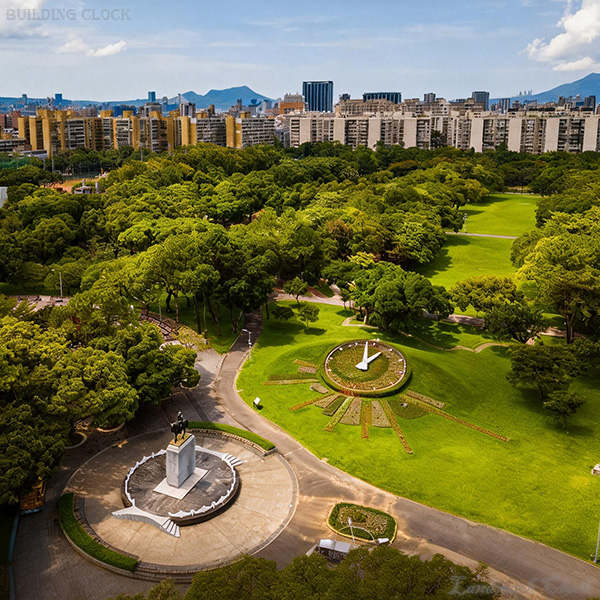
A well-designed floral clock is more than a decorative flowerbed—it is a working public timepiece that doubles as a recognizable park icon. In this case, the floral clock sits within a large metropolitan youth-oriented park in northern Taiwan, where the broader site was shaped by layered history and later re-planned into a comprehensive public green space with sports, education, and leisure functions. The park’s official visitor information describes a transformation from earlier intensive land uses (including military training use and a former airfield period) into a civic recreational park, formally reconstructed and opened as a public facility in the late 1970s.
For owners and operators—municipal park departments, development authorities, or campus-style estate managers—this kind of floral clock solves a recurring challenge: how to create a “signature” landscape moment that remains fresh across seasons without building a high-risk structure. A floral clock does this by combining three proven elements: (1) an easily understood circular composition; (2) horticultural “carpet bedding” patterns that can be renewed; and (3) a durable clock mechanism with large outdoor hands. As summarized in general references, floral clocks typically use carpet bedding to form a visible dial while the mechanism is set below grade, allowing the landscape to remain the hero while the equipment stays protected.
Site Role: A Gateway Feature That “Reads” Instantly
Many public parks are large and program-rich: sports courts, walking loops, pools, lawns, and community facilities. The official park description emphasizes exactly that—an expansive site with multiple paid and free sports facilities, plus educational and social amenities, and a landscape character defined by flowerbeds, trees, and broad paths.
In such parks, visitors need quick orientation cues. A floral clock placed near an entrance plaza functions as a visual anchor—the place where families meet, tours begin, and casual users stop for photos. This is especially powerful in youth-focused parks where weekends bring mixed crowds: children, elderly walkers, athletes, and visitors with strollers or wheelchairs.
Design takeaway for clients: if your park has multiple gates and long internal walking distances, a floral clock works best when positioned where foot traffic naturally converges—near an arrival plaza, primary axis, or landmark lawn.
Landscape Composition: Radial Geometry + Seasonal Color Strategy
The park’s visitor information describes radial-shaped flowerbeds near the entrance filled with vivid seasonal color and lists commonly used bedding plants and shrubs, creating the feeling of “entering a flower show.”
That “flower show” effect is not an accident; it is a repeatable planting strategy:
- Radial geometry (spokes, wedges, rings) provides strong order, so even bold color mixes remain legible.
- Layered height control keeps the dial readable: low bedding plants for the face, slightly taller edging for borders, and clean shrubs behind as a calm green backdrop.
- Seasonal palettes maintain novelty without redesigning the structure—only the planting plan changes.
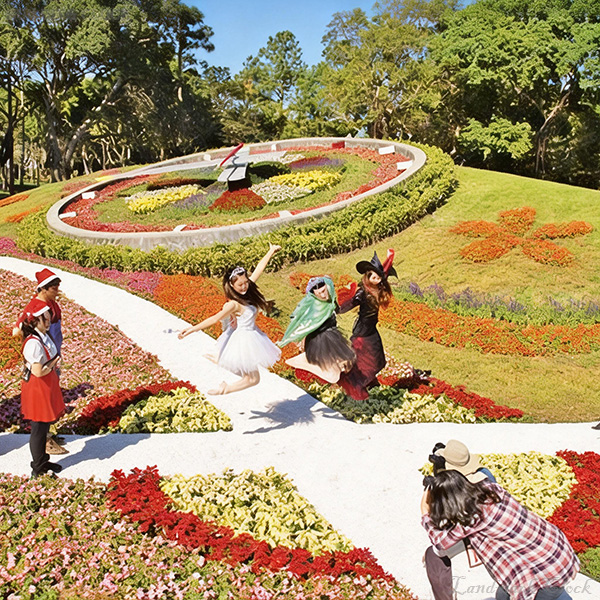
Recent local reporting on the floral clock display highlights how the park’s clock area is periodically “refreshed” with themed seasonal plantings (for example, holiday and autumn displays using color-blocked bedding), reinforcing the clock as a recurring seasonal destination for photography and casual tourism.
Owner value: this approach creates a reliable annual content calendar (spring color, summer durability, autumn gradients, winter festival tones) while keeping CAPEX stable and shifting creativity into OPEX—exactly where municipal horticulture teams are strongest.
Clock Face Engineering: Durable Hands, Clear Readability, Safe Maintenance
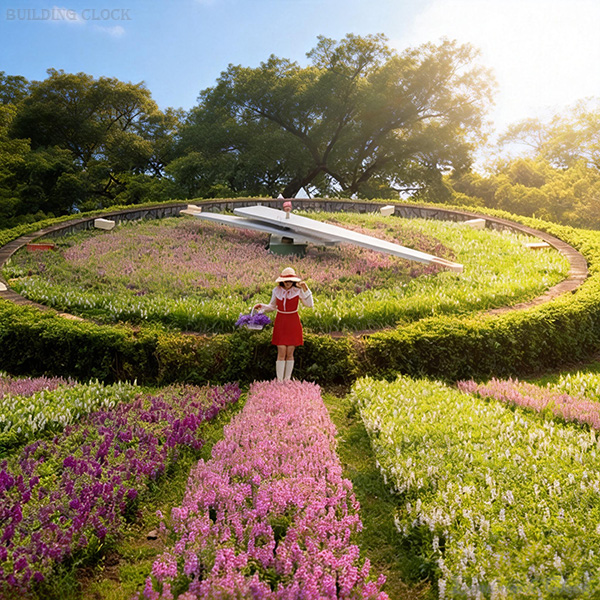
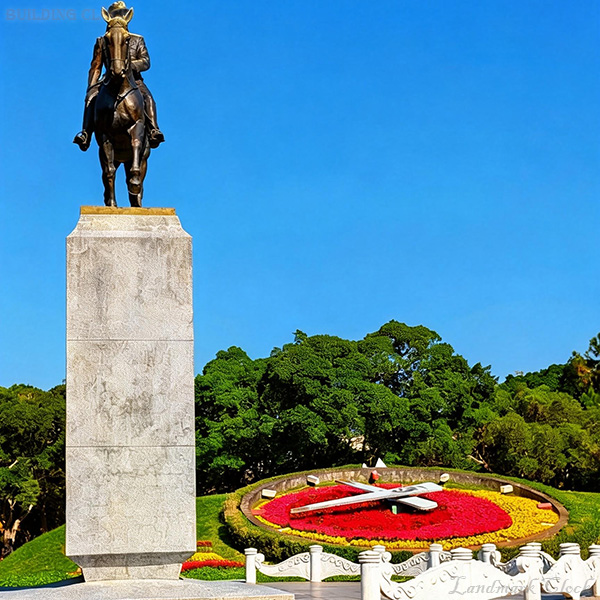
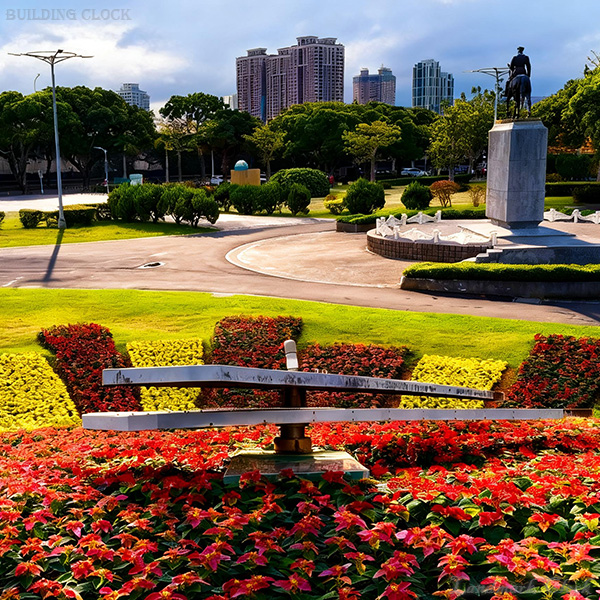
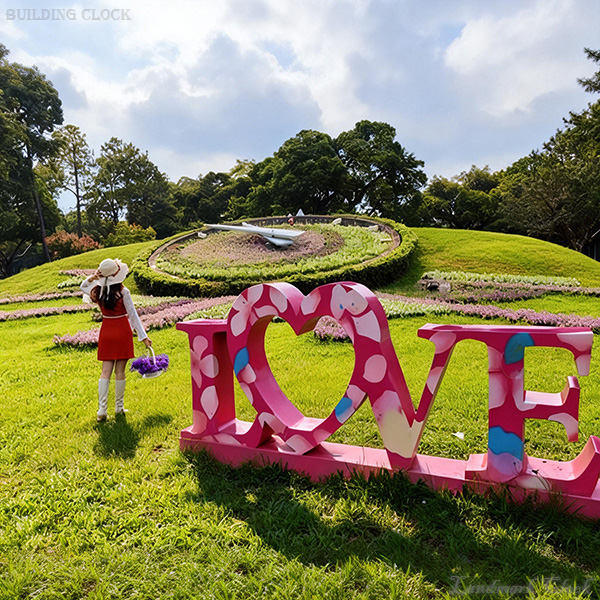
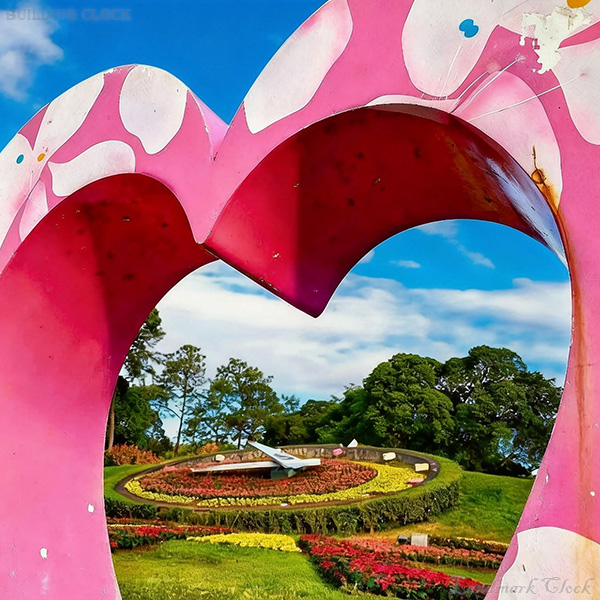
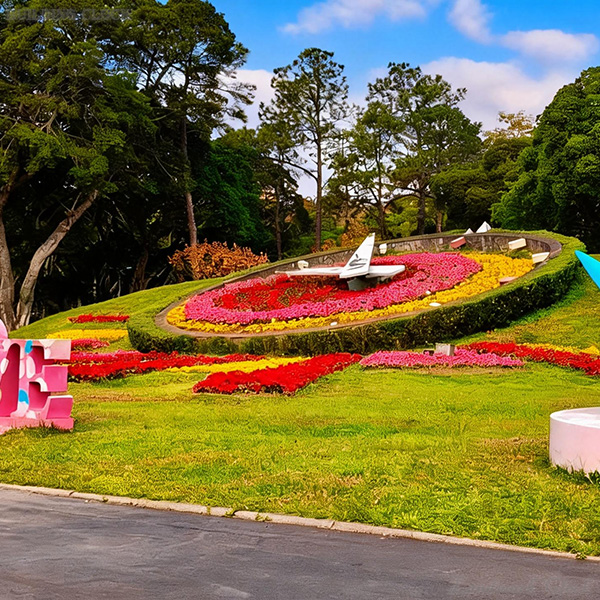
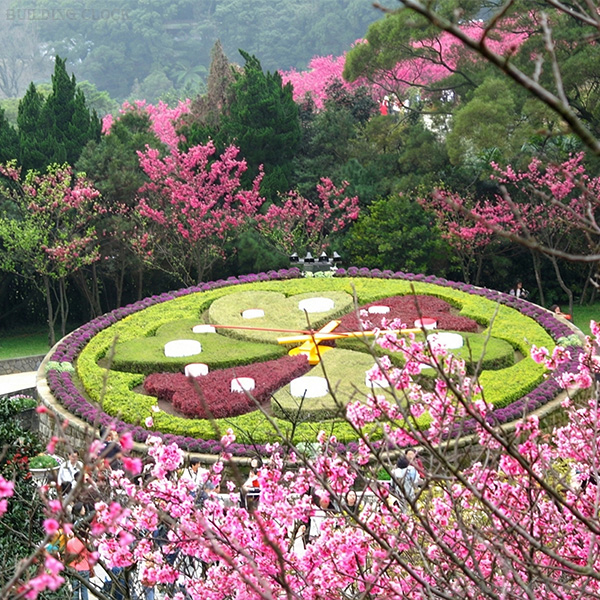
From the provided photos, the clock is composed as a large circular floral dial set within a carefully trimmed berm and lawn. The hands are oversized and sculptural, with strong contrast against the planting—critical for readability at a distance and in varied daylight. The dial is bordered cleanly, which helps maintenance teams separate turf, shrubs, and bedding zones.
From a project delivery standpoint, successful floral clock engineering usually requires:
- A robust below-grade mechanism chamber (weather-protected, lockable, serviceable).
- Long-life outdoor hands (corrosion-resistant metal, wind-load tested, balanced to protect the movement).
- Dial indexing that can be “read” by visitors even when the flower pattern changes (fixed markers, a consistent border ring, or permanent numerals/segments).
- Maintenance access that avoids trampling the face (stepping pads, concealed paths, or scheduled closure windows).
The Wikimedia Commons file documenting the former floral clock structure in this park context reinforces the long-term documentation and public interest in the feature, with licensing and archival details showing the clock has been a recognizable subject for years.
Horticulture + Operations: The Real Differentiator
A floral clock succeeds or fails on operations. This case offers a practical reference model because the park itself is managed as a full-service metropolitan park with extensive planting, lawns, and public facilities—meaning the governance structure and staffing model already supports regular horticultural cycles.
Recommended operational model for similar clients:
- Seasonal changeovers: 3–6 times/year depending on climate and visitor importance.
- Plant selection: favor bedding species with fast fill, strong heat tolerance, and predictable color blocks; keep a secondary palette for shade edges and transition zones.
- Irrigation: dedicated zones for the face, border, and background, so the dial can be optimized without overwatering turf.
- Drainage: ensure rapid runoff from the face and chamber edges to prevent root rot and protect the mechanism enclosure.
- Visual QA: treat the clock like a “living signboard”—weekly edge trimming, monthly color balancing, and immediate patching for gaps.
The park’s own description lists extensive plantings and emphasizes how landscape planning and planting are key attractions—an institutional acknowledgment that landscape is not decoration but the park’s identity.
Procurement + Tendering Notes (What Decision-Makers Care About)
If you are a municipal client, developer, campus estate manager, or a park operations authority, floral clocks are attractive because they are high-impact but controllable. A practical tender structure typically includes:
A. Scope packages
- Civil + foundations + drainage for the dial berm and chamber
- Clock mechanism + hands + controls (incl. lightning protection and grounding)
- Irrigation system (zoned valves, filtration, backflow prevention as required)
- Planting + soil profile + edging details
- Optional lighting and seasonal decoration interface points
B. Performance requirements
- Timekeeping accuracy standard and acceptable drift
- Wind-load and corrosion-resistance requirements for hands and fixings
- Serviceability: access hatch sizing, safe access method, lock standard
- Planting visibility: minimum contrast ratio between hands and face
- Warranty + spare parts + training for park staff
C. Life-cycle clarity
- A floral clock is not “install and forget.” It is a managed landmark.
- The best tenders include a 12-month horticultural support period (to stabilize soils, irrigation tuning, and seasonal changeover training), then handover to the park team or a framework contractor.
This model aligns with how large metropolitan parks are already operated—multi-use public assets requiring both built infrastructure and ongoing grounds management.
Social Value: Wayfinding, Pride, and Low-Barrier Public Enjoyment
A working floral clock offers a rare mix of benefits:
- Universal legibility (children, seniors, tourists—everyone understands a clock)
- Photo economy (a landmark that naturally generates visitor sharing and seasonal returns)
- Civic pride (a public symbol that changes with holidays and seasons)
- Accessible delight (no ticket, no language barrier, low physical demand to enjoy)
Recent coverage describing seasonal refreshes of the floral clock area shows how simple planting updates can re-energize public attention—turning everyday parks into seasonal micro-destinations.
Why This Case Matters for Buyers
If you are sourcing a floral clock for a city park, botanical garden, waterfront promenade, campus, or civic plaza, this Taiwan metropolitan-park example demonstrates a repeatable recipe:
- Strong geometry and distance readability
- Seasonal planting refreshes that keep the landmark “new”
- A durable mechanism approach that protects maintenance time and safety
- A civic-scale feature that supports wayfinding and visitor experience
Professional Notes & Specification Table (for Floral Clock Product Pages)
Item | Recommended Specification (Typical Range) |
Clock Type | Outdoor floral clock with real working hands (below-grade mechanism chamber) |
Dial Diameter Options | 4 m / 6 m / 8 m / 10 m / 12 m (customizable by site scale) |
Time Control | Quartz or synchronized controller (GPS/NTP options where required) |
Hands Material | Aluminum or stainless steel with anti-corrosion coating; balanced for wind load |
Visibility | High-contrast hands + clear border ring; optional fixed markers |
Planting System | Carpet bedding layout with modular seasonal changeover plan |
Soil Profile | Engineered soil mix + separation layers + root-zone drainage |
Irrigation | Zoned drip/spray hybrid; filtration; programmable controller |
Drainage | Perimeter drains + chamber protection; runoff control for heavy rain events |
Electrical | Weather-rated cabling, grounding, optional lighting circuits |
Maintenance Access | Lockable service hatch/chamber; safe access route; inspection schedule |
Typical Use Cases | Municipal parks, botanical gardens, tourism plazas, campuses, waterfront promenades |
Leave Your Message
Products categories
-
Seasonal Floral Clock Landmark for Metro
-
Heritage Floral Clock Landmark for Publi
-
Giant Floral Clock Pavilion with Sloped
-
Hilltop Park Floral Clock in South Korea
-
Tropical Floral Clock Landmark for Publi
-
Floral Clock Installation for Public Gar
-
Seaside Theme Park Floral Clock Landmark
-
Mountain Park Floral Clock Landmark for
-
GPS-Synchronized Flower Clock Landmark f
-
Public Park Flower Clock with 2.5 m Seco