


Landmark Floral Clock for Public Parks — Large-Scale Living Timepiece & Civic Garden Feature
Landmark Floral Clock for Public Parks — Large-Scale Living Timepiece & Civic Garden Feature
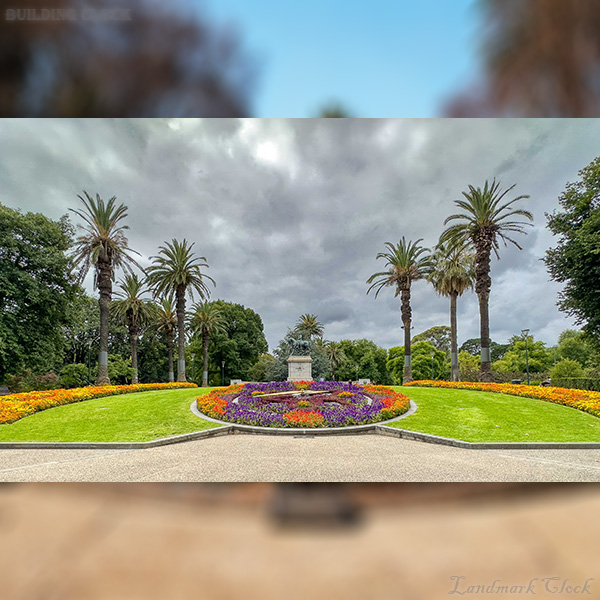
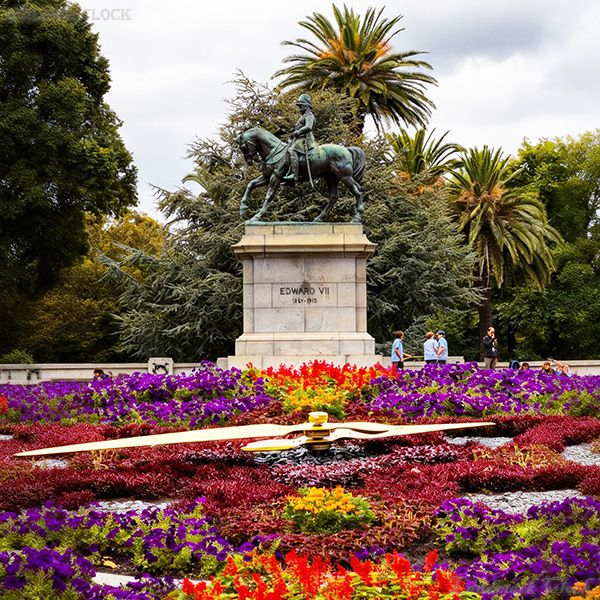
A successful public-park floral clock is never “just a clock.” It is a living landscape installation that must perform as a timekeeping device, a seasonal horticulture showcase, a visitor magnet, and a long-term civic asset—often all at once, every day, in every kind of weather. This case represents a mature model: a large-format floral clock in a prominent civic garden setting within a major Australian city, positioned as a signature landmark and a recurring seasonal highlight.
A civic landmark that behaves like a “living exhibit”
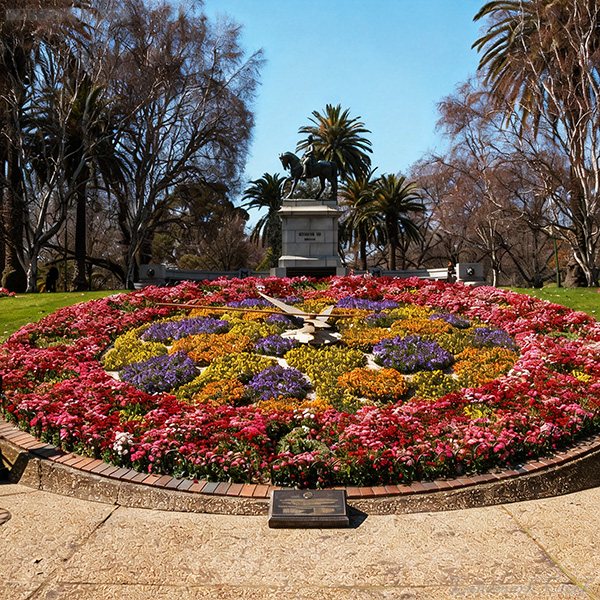
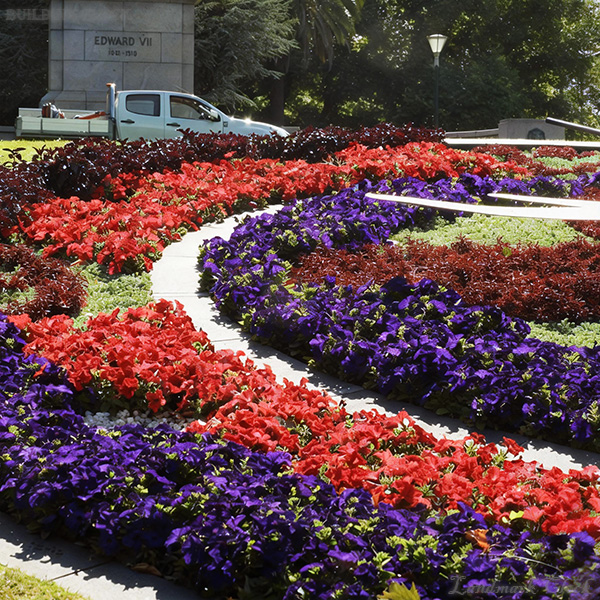
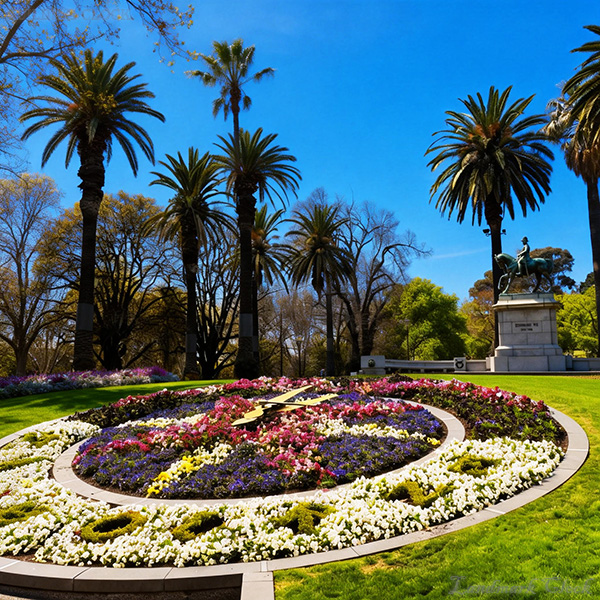
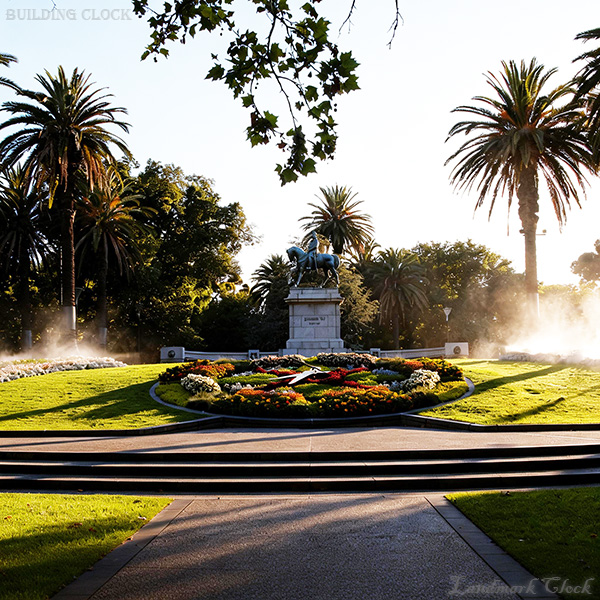
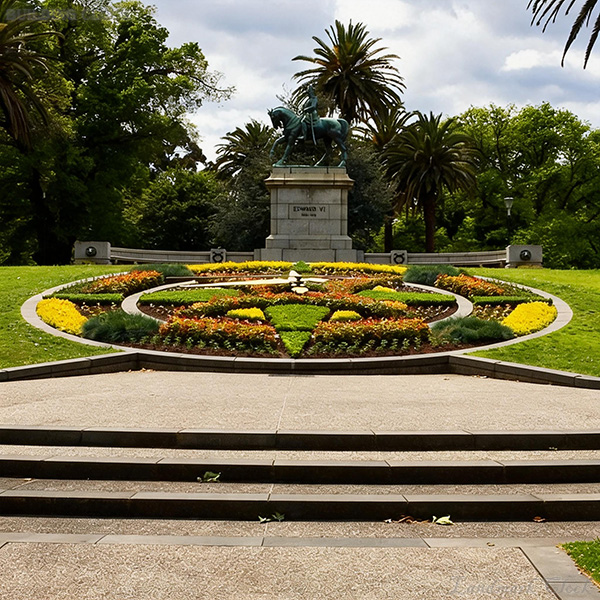
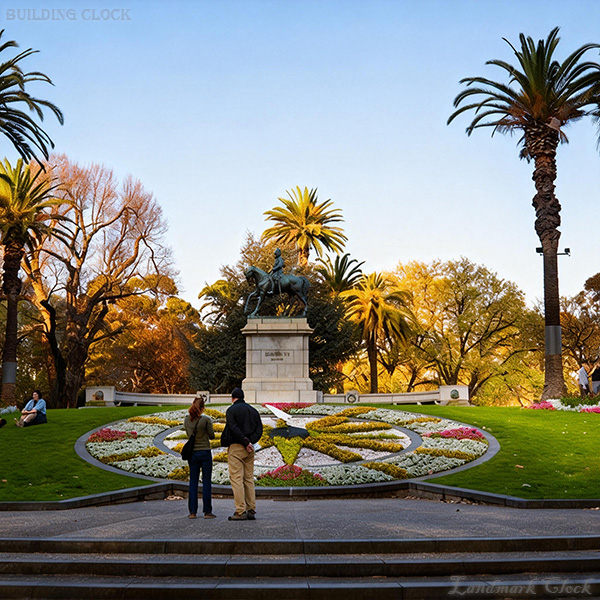
What makes this installation enduring is how it blends large-scale legibility with botanical craftsmanship. From a distance, visitors read time instantly—thanks to the bold dial geometry and oversized hands. Up close, the dial becomes a tapestry of low-growing color fields, planted with precision to create clean edges and strong contrast. The visual impact is not accidental: the entire composition is designed to be camera-friendly from multiple viewpoints, and the surrounding lawn/paths encourage visitors to pause, gather, and take photos—turning a simple timepiece into a recurring “must-see” stop.
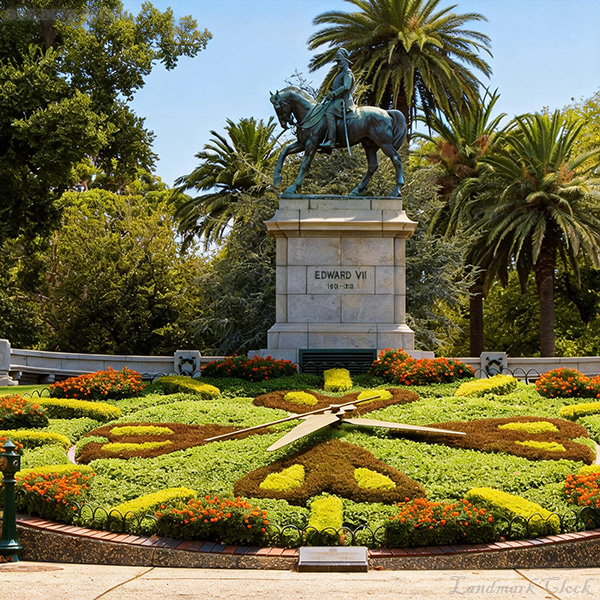
Behind the dial, a monumental sculpture backdrop reinforces the sense of place and civic memory. This is a subtle but important placemaking strategy: pairing a floral clock with a formal monument increases perceived value, improves wayfinding (“meet at the clock”), and strengthens the site’s identity as a ceremonial garden node.
Scale and planting strategy: why “9m-class” matters
This floral clock is notably large—over 9 meters in diameter—which places it in a category where engineering discipline matters as much as planting artistry.
At this scale, a floral clock must address:
- Dial readability at public-park distances
- Structural stability of hands and central hub
- Wind loading and long-term alignment
- Safe visitor proximity and edge detailing
- Maintenance access without disrupting the display
The planting plan uses more than 7,000 low-growing bedding plants, which allows for dense coverage, crisp patterning, and seasonal color reliability.
For owners and park operators, the “7,000+ plants” number is not only a fun fact—it signals the real operational truth: this is a managed horticultural program, not a one-time build.
Seasonal renewal as an operating rhythm (and a built-in marketing engine)
A key reason this clock stays culturally relevant is that it is re-themed and replanted twice per year, aligned with seasonal change (commonly spring and autumn).
This semiannual redesign cycle creates a dependable public narrative:
- A “new face” to promote on official channels
- A seasonal photo-op that residents recognize
- A repeat visitation trigger (“Let’s see this season’s design”)
- A platform for civic messaging, anniversaries, and cultural motifs
From a procurement perspective, this rhythm is also a planning advantage. The theme can be locked early, plants can be contracted in advance, and the changeover becomes a scheduled operations event rather than an emergency response. One published account notes that plant orders may be planned months ahead to allow propagation and supply readiness.
Timekeeping mechanism: reliability designed into the landscape
The clock mechanism is engineered for consistency in a public outdoor environment. The hands are driven by a synchronous motor housed within a protected central concrete casing—a practical approach that shields the drive system and keeps the dial surface visually clean.
For city owners, this arrangement reduces downtime risk and simplifies service access: the “living surface” remains the star, while the mechanical core stays robust and protected.
Equally important: this floral clock was donated in 1966 by Swiss watchmakers as a goodwill gesture, reinforcing the project’s association with precision timekeeping and international craftsmanship.
That origin story adds interpretive value—useful for signage, guided tours, and public communications—without needing heavy infrastructure.
Landscape architecture integration: circulation, safety, and “edge quality”
Great floral clocks succeed because the surrounding landscape is designed as part of the product:
- Approach geometry: gentle slopes and clear sightlines amplify reveal moments.
- Perimeter detailing: crisp edging (brick/stone/metal) protects planting lines and communicates quality.
- Visitor control without barriers: subtle grade changes, low curbs, and planting borders reduce foot traffic damage while staying welcoming.
- Maintenance lanes: hidden access points allow horticulture teams to weed, deadhead, and replant without trampling the design.
If a public client is comparing proposals, this is a critical differentiator: the most successful bids treat the floral clock as a landscape system—dial + irrigation + drainage + access + visitor behavior—not a standalone object placed on grass.
Operations reality: daily checks, risk control, and durability
In high-visibility parks, living installations face routine challenges: weeds, litter, animal damage, vandalism, and occasional theft of plants. One operational description highlights regular checks for damage and debris as part of day-to-day care.
This is exactly where professional productization matters. A well-specified floral clock should include:
- Planting substrate and drainage strategy that resists waterlogging
- Irrigation zoning for the dial vs. perimeter beds
- Easy-to-source seasonal plant palettes suited to the local climate
- A maintenance checklist and seasonal replant method statement
- Options for discreet lighting and CCTV coordination if required
Social value: time, beauty, memory, and community rituals
A civic floral clock becomes a memory-making device. It’s where people agree to meet, where families take annual photos, and where seasonal change is made visible. A local radio story collected personal connections—relatives involved in planting, recurring traditions, and “this is our landmark” identity—showing how a floral clock can become part of a city’s emotional map.
For municipal stakeholders, that is a measurable return: increased dwell time, repeat visitation, stronger public pride, and an iconic image used in tourism and city branding.
Why public clients choose this typology (owner’s perspective)
For city councils, park authorities, cultural precinct managers, and donors, a floral clock answers multiple briefs at once:
- A signature landmark with low building mass and high visual impact
- A seasonal program that supports events, festivals, and social media calendars
- A horticulture showcase that demonstrates capability and care standards
- A civic “gift” platform suitable for partnerships, commemorations, and sponsorship
- A practical time feature that is intuitive and universally understood
When specified well, it also offers predictable lifecycle cost planning: the core mechanism is durable, while the planting refresh becomes a known operating expense that can be tendered as part of a horticulture contract.
Fixed Professional Content (Do Not Remove)
Recommended Solution Type
Large-format Floral Clock (Bedding Plant Dial) with robust central drive, outdoor-rated hands, irrigation-ready planting structure, and a seasonal replant program.
Typical Scope (Supply + Integration)
- Dial structure & edging system
- Central hub + outdoor time movement + hands set
- Irrigation interface & drainage detailing guidance
- Planting plan templates (seasonal) + pattern layout grid
- Installation coordination drawings (civil/landscape interface)
- O&M manual + seasonal replacement workflow
Reference Specification Table (Configurable)
Item | Specification (Typical / Configurable) |
Dial Diameter | 6–12 m (9 m-class common for civic landmarks) |
Display Type | Bedding plant dial / mixed-groundcover dial |
Plant Quantity | 3,500–12,000+ (depends on plug size & density) |
Hands Material | Aluminum / stainless steel (powder-coated optional) |
Drive System | Outdoor-rated synchronous / step motor (serviceable hub) |
Time Control | Local controller / GPS time sync optional |
Structure | Corrosion-resistant frame + drainage layer |
Irrigation | Drip or micro-spray zoning; smart controller ready |
Lighting (Optional) | Low-glare perimeter or hand illumination |
Maintenance Plan | Weekly grooming + seasonal redesign/replant (1–4x/year) |
Climate Strategy | Palette tuned to local sun, wind, frost & heat |
Warranty | Movement + structure per project specification |
Leave Your Message
Products categories
-
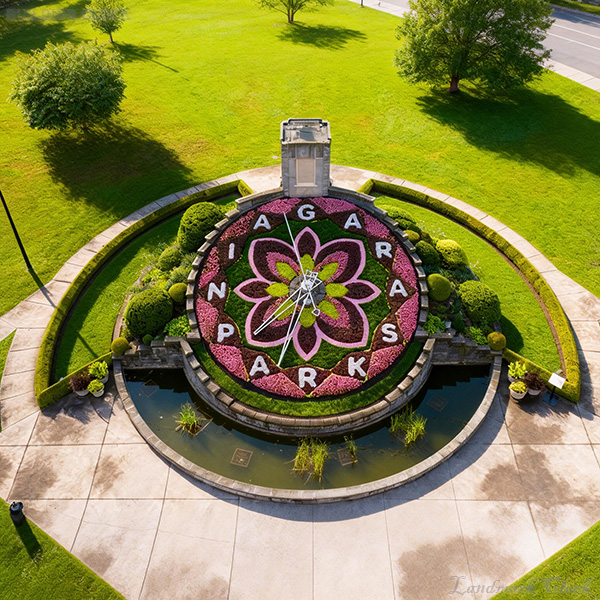
40-Foot Floral Clock Landmark for Public
-
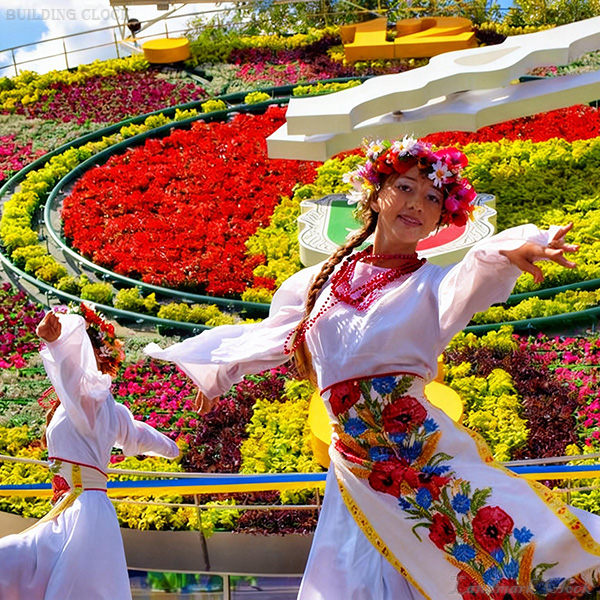
Giant Floral Clock Pavilion with Sloped
-
Landmark Floral Clock for Public Parks —
-
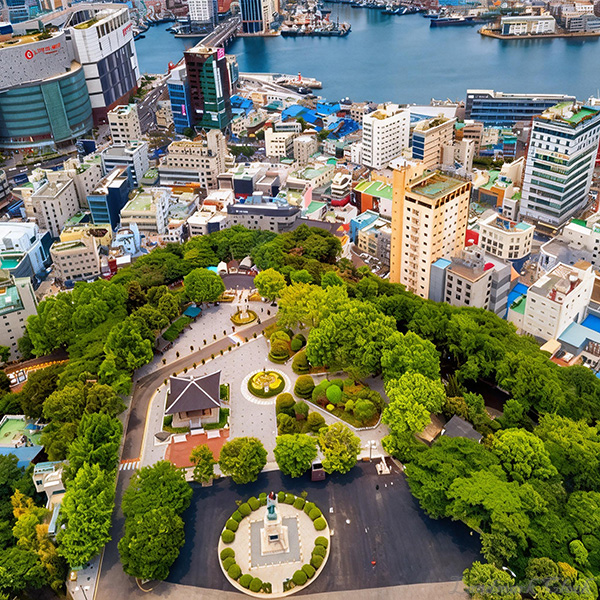
Hilltop Park Floral Clock in South Korea
-
Floral Clock Installation for Public Gar
-
Hillside Floral Clock Landmark for Civic
-
Seaside Theme Park Floral Clock Landmark
-
Mountain Park Floral Clock Landmark for
-
Hillside Floral Clock Landmark for Civic
-
Heritage Flower Clock Landmark for Urban