


Native-Plant Floral Clock for Public Parks and Botanical Gardens
Native-Plant Floral Clock for Public Parks and Botanical Gardens
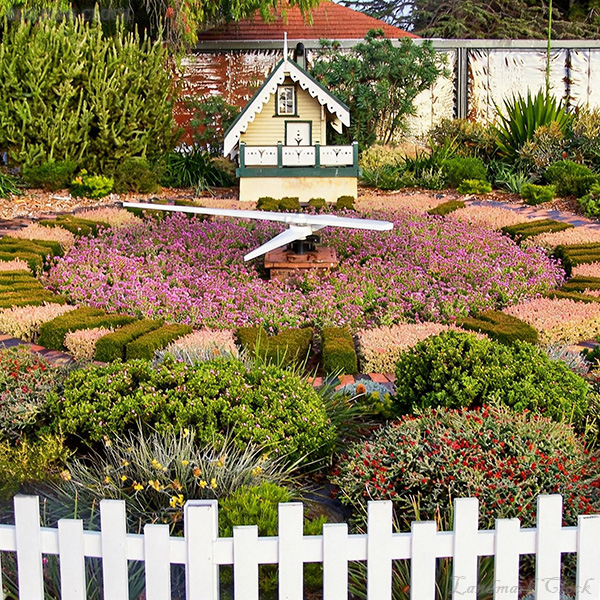
A floral clock is more than a novelty timekeeper. It is a living landmark that combines precision outdoor clock engineering with curated planting design, creating an instantly recognizable focal point for public parks, botanic gardens, and civic landscapes. This case demonstrates how a well-managed floral clock becomes a long-term signature asset, photographed year-round, refreshed seasonally for events, and maintained with predictable horticultural and mechanical routines.
A living dial that reads instantly
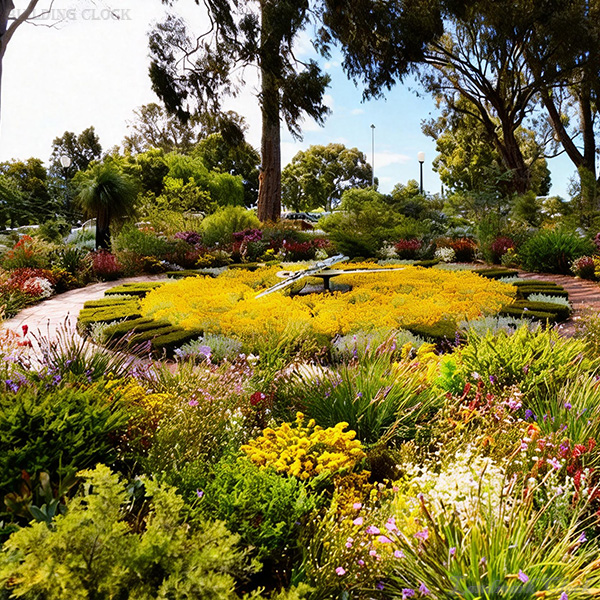
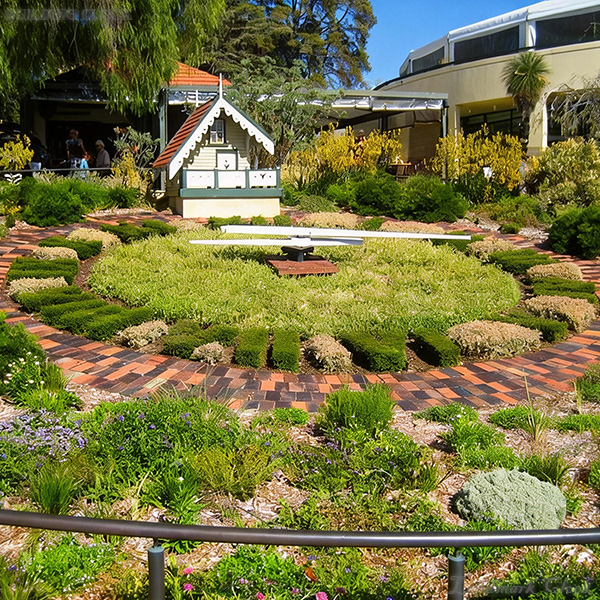
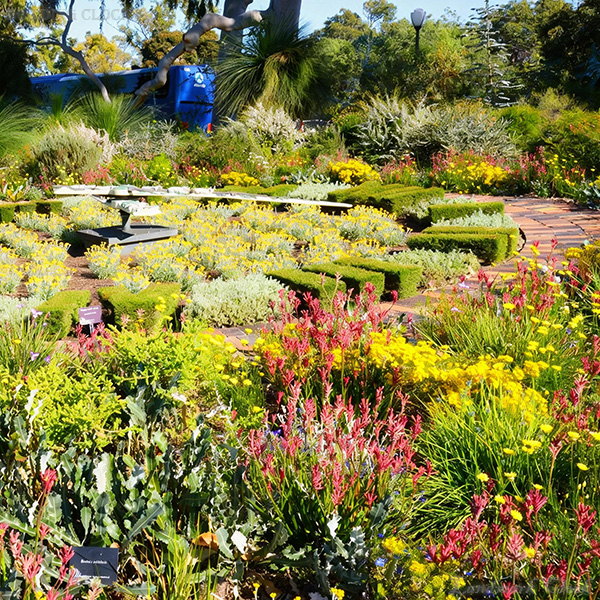
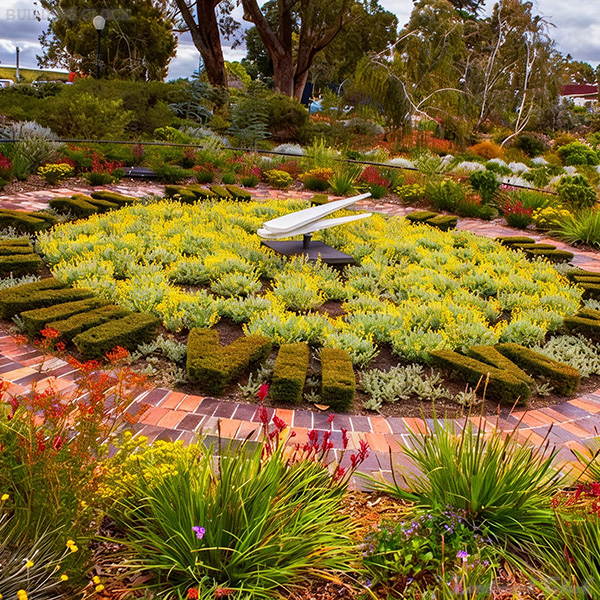
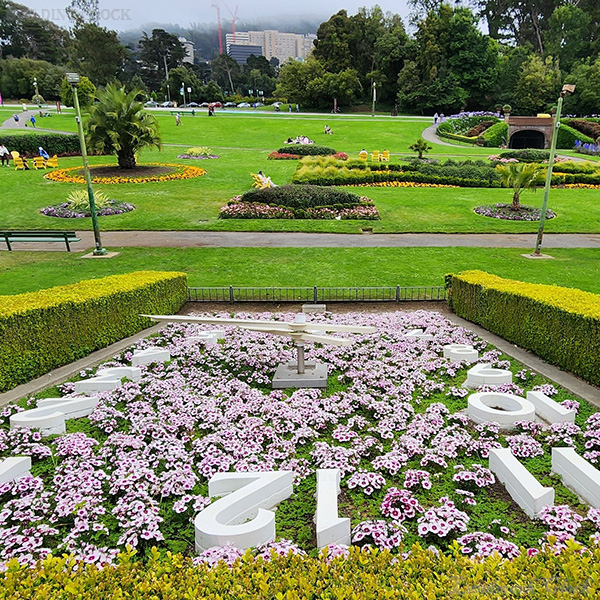
The success of this floral clock format comes from the clarity of its geometry: a strong circular dial, bold hour markers, and oversized hands that remain legible from multiple approach lines. In this project, Roman numerals formed by clipped shrubs provide evergreen structure, while the inner dial face is replanted to deliver seasonal color sweeps, an approach that keeps the landmark visually new without changing the underlying infrastructure.
The brick ring path and low, layered planting create a practical viewing edge for visitors while supporting safe access for staff during seasonal changeovers. For park operators, this is an important balance: high impact with controlled maintenance boundaries.
Design lineage and long-term adaptability
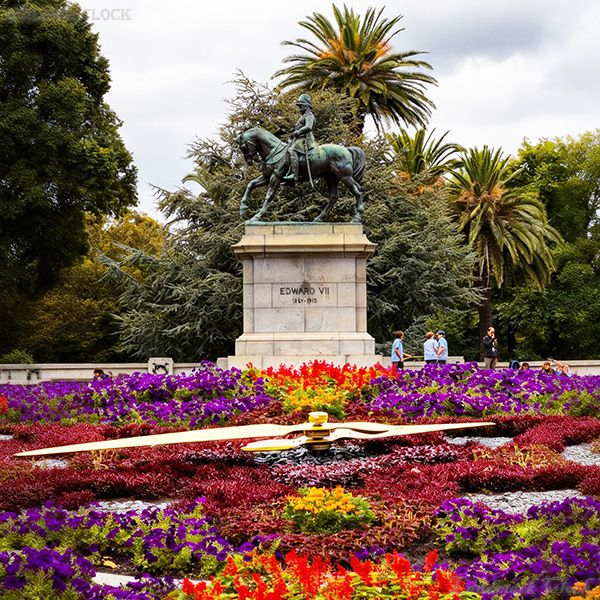
This floral clock was introduced in the early 1960s and has been relocated and updated over time, reflecting changes in visitor circulation and park planning. This is a valuable precedent for owners: a floral clock is not locked to one spot forever, its identity can be preserved while siting and surrounding landscape are adapted to new entrances, plazas, or redevelopment phases.
Restoration and renewal as public value
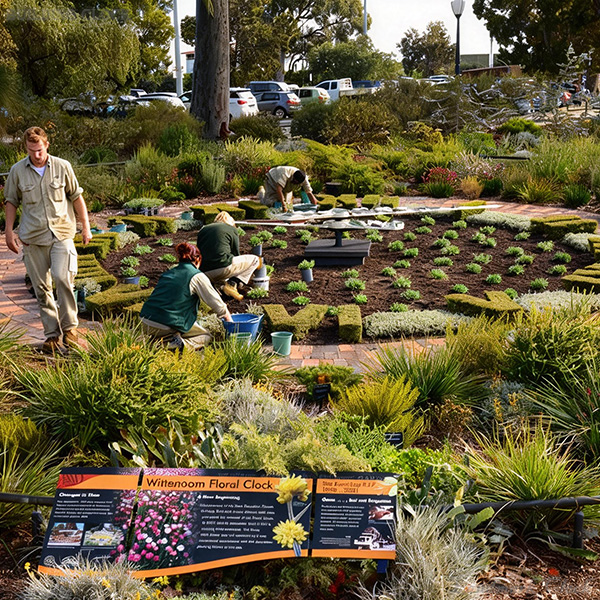
Floral clocks lend themselves to public storytelling because their components are tangible: hands, movement, and planting. Past restoration work included the recovery and repair of earlier hand sets, while later upgrades introduced durable modern hands with artistic motifs drawn from regional flora and fauna. This model shows how a floral clock can be treated like civic heritage infrastructure, maintained for reliability, refreshed for relevance, and interpreted to the public as part of a broader park narrative.
Planting strategy for public landscapes
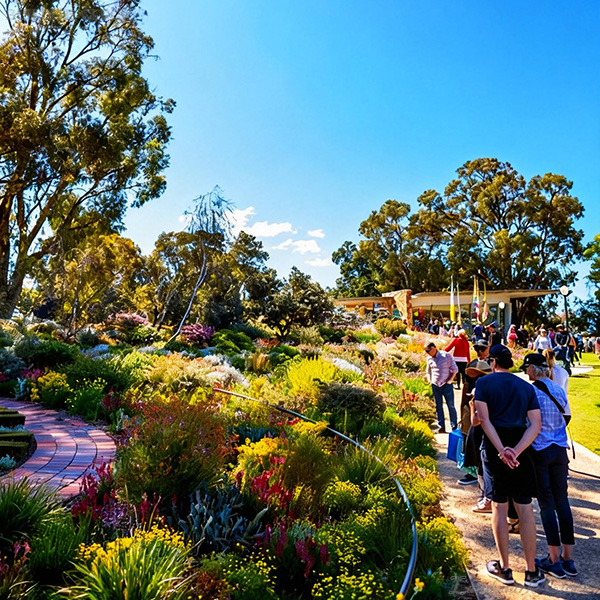
A floral clock performs best when planting design is aligned with climate realities, irrigation strategy, and staffing. The surrounding landscape in this case emphasizes water-wise, regionally appropriate planting, a procurement-friendly direction because it reduces risk from heat, wind, and water constraints while supporting education and biodiversity messaging. Seasonal bedding inside the dial is treated as a controlled display zone, allowing color themes to be planned around festivals and peak visitation months.
What owners, planners, and procurement teams evaluate
Public clients typically assess a floral clock through four lenses.
Reliability and safety: stable foundations, robust movement, secure access, and predictable performance in wind and weather.
Lifecycle cost and serviceability: modular components, accessible drive housing, replaceable hands, and routine calibration.
Visitor experience: legibility, photo viewpoints, barrier-free access, and interpretive signage.
Programming and brand value: a seasonal canvas for anniversaries, festivals, sponsorships, and community engagement.
This case demonstrates a best-practice approach: keep the geometry timeless, refresh the planting palette seasonally, and use upgrades as opportunities to strengthen identity, durability, and media value.
Fixed Professional Content and Specification Table
Professional Notes Engineering and Landscape Integration
System Type: Outdoor floral clock with living landscape dial and mechanical timekeeping system
Typical Applications: Public parks, botanical gardens, civic plazas, cultural districts, visitor centres, waterfront promenades, resort landscapes
Design Principle: Permanent dial geometry with renewable seasonal planting for long-term operational efficiency
Readability: Oversized hands and high-contrast hour markers designed for pedestrian viewing distances
Landscape Compatibility: Roman numerals can be formed using clipped shrubs or groundcovers or hardscape markers, dial face supports seasonal annuals and perennials
Operations Planning: Maintenance zoning between dial and perimeter beds improves staffing efficiency and reduces visitor disruption
Procurement Fit: Works under design bid build or design build, scopes may be split into civil foundation, mechanical clock system, and horticultural works
Specification Parameters Typical and Customizable
Item | Standard Configuration | Options and Notes |
Dial Diameter | Custom-built | Common range 3 to 12 metres site-driven |
Display Type | Roman numerals and seasonal dial planting | Arabic numerals, minimal markers, bespoke motifs |
Hands | Oversized hour and minute hands | Aluminium, stainless steel, FRP composite, treated timber heritage |
Finish | Outdoor coating system | Powder coat, marine-grade coating for coastal exposure |
Timekeeping Movement | Heavy-duty outdoor clock drive | High-torque movement for large hands, anti-backlash designs |
Time Sync | Standard time setting | GPS, radio, or network time synchronization optional |
Power Supply | AC mains | Solar hybrid possible depending on site conditions |
Control Access | Lockable service access | Tamper-resistant enclosure, maintenance-friendly layout |
Foundation and Mount | Engineered central plinth | Designed to local codes, wind loads, and soil conditions |
Dial Bed Construction | Edge restraint and drainage layer | Enhanced drainage for heavy rain and irrigation control |
Irrigation | Zonal irrigation recommended | Smart controllers, moisture sensors, drought-response programming |
Planting Strategy | Seasonal color-change bed | Native water-wise palette, festival themes, low-allergen options |
Lighting | None by default | Dial wash, hand highlight, event lighting integration |
Signage | None by default | Interpretive plaque, donor sponsor panel, QR information |
Maintenance Plan | Seasonal planting and routine service | Spare parts package, annual calibration, on-site training |
Climate Suitability | Outdoor public landscape | Material selection and coatings tuned to heat, UV, humidity, salt spray |
Delivery Scope Typical
Clock movement, hands, and mounting hardware
Dial layout shop drawings including geometry, marker positions, and hand clearances
Foundation interface requirements and installation guidance
Planting concept support for dial infill and numerals and perimeter structure
Commissioning and time calibration procedure
Optional spare parts kit, training, and maintenance SOP documentation
Leave Your Message
Products categories
-
Seasonal Floral Clock Landmark for Metro
-
Heritage Floral Clock Landmark for Publi
-
Landmark Floral Clock for Public Parks —
-
Hilltop Park Floral Clock in South Korea
-
Tropical Floral Clock Landmark for Publi
-
Hillside Floral Clock Landmark for Civic
-
Native-Plant Floral Clock for Public Par
-
Seaside Theme Park Floral Clock Landmark
-
Mountain Park Floral Clock Landmark for
-
Hillside Floral Clock Landmark for Civic